Mom nodded again.
That hurt more than I expected.
Not because it made him a monster.
It didn’t.
The story as she told it was sad, young, messy, and painfully ordinary.
But because my father had been gone eight years, and I had spent all that time thinking I knew the shape of his life.
It turned out there had been a locked room in it.
A whole person in it.
“And you knew,” I said.
She flinched.
“No,” she said, then corrected herself. “Not at first. Not when I married him. Not when you were born.”
“When, then?”
“After he died.”
That stunned me enough to pull me up short.
“What?”
She rose slowly and went to the hallway closet.
From the top shelf she brought down a small cedar box I had never seen before.
Or maybe I had seen it and never noticed. Houses are full of that kind of blindness.
She set it on the table between us.
My father’s initials were burned into the lid.
T.L.
I stared at it.
Mom sat again and touched the wood with two fingers.
“I found this when I was sorting his things after the funeral. It was hidden behind old tax folders in the filing cabinet. I opened it because I thought maybe it was money, or papers I’d need, or one more bill to pay. Instead…” She swallowed. “Instead it was letters.”
My hand moved toward the box and stopped.
“From June?”
“Yes.”
“And you never told me?”
Her voice broke on the first word.
“I was angry.”
There it was.
Not noble.
Not graceful.
Just true.
“I had buried a husband,” she said. “I was learning how to breathe in a house that had gone quiet overnight. And then I found out there was a whole corner of him I never knew. A girl out there. Maybe grown by then. Maybe wondering why he never came. Maybe not wondering at all. I didn’t know what was mine to disturb and what was mine to leave alone.”
I looked at the box.
My father’s initials blurred for a second.
“Did he know about Nora?”
“Eventually.”
“Eventually?”
Mom nodded.
“The letters started years after it all happened. June wrote him later. After the adoption. After she found a way to contact him again. She told him the baby had been placed with relatives in another town for a while, then formally adopted. She sent one photo.”
I put a hand over my mouth.
“Did he ever meet her?”
“I don’t know,” Mom whispered. “There’s no proof in the box that he did. He answered some of the letters. There are copies. He wanted to. That much is clear. But there was distance. Pride. Money. Other people involved. And then the letters stop.”
“Why?”
My mother shook her head.
“I don’t know.”
I opened the box.
Inside were old envelopes tied with faded blue ribbon.
A Polaroid.
A hospital bracelet.
A small silver baby spoon with the engraved word NORA.
I made a sound I did not recognize as mine.
Because once a story becomes object, it is harder to survive.
A letter is worse than a rumor.
A baby bracelet is worse than a confession.
I picked up the Polaroid first.
A young woman stood in front of a feed store sign with sunlight in her hair and a baby on her hip.
The baby had a round little face and one sock half off.
The woman was smiling.
And even through the grain and age and color fading, I could see it.
The eyes.
Not mine.
Not Nora’s.
Something beneath both.
Something older.
Dad.
I don’t know how long I sat there.
Long enough for the coffee in my thermos to go cold.
Long enough for my mother to stop trying to defend herself and simply sit with me in the truth.
When I finally looked up, my face was wet.
“Why didn’t you tell me after the funeral?” I asked.
“Because I was selfish,” she said.
It came out clean.
No excuses.
No decorations.
“I thought if I said it out loud, I’d lose the man I had. I thought your grief would turn confusing. I thought maybe the girl had a life and didn’t need us turning up with old sorrows. Then years passed, and years make cowards of people. Every year I didn’t say it made the next year harder.”
I believed her.
That did not make it easier.
It only made it sadder.
That evening Nora texted me.
Thank you again. Lily fell asleep in the car holding the cereal box she made me buy after all that. She said the “store mom” likes breakfast.
A second text came right after.
I know today was strange. But I need to ask. Would you be willing to meet me tomorrow?
I stared at the screen.
Then at the cedar box.
Then at the old Polaroid.
Yes, I typed back. Tomorrow works.
We met at a diner just off the highway where the coffee is never quite good enough and the pie always looks better than it tastes.
Neutral ground.
Vinyl booths. Bottomless refills. No one asking personal questions if your face looks serious.
She came in wearing a navy cardigan and no makeup.
I stood when I saw her.
So did she.
For a second we both just laughed from the sheer shock of seeing each other again on purpose.
Not because it was funny.
Because it was too strange not to.
Up close, in daylight, not under fluorescent grocery lights and fear, the resemblance was gentler.
Still there.
Still undeniable.
But life had left its own signatures on us.
I had paint beneath one thumbnail and a callus from pencils on my middle finger. She had laugh lines I hadn’t earned yet and the kind of careful posture that comes from carrying too much on your own.
We sat.
The waitress poured coffee and called us “hon” twice.
Neither of us touched the menus.
Nora went first.
“Lily keeps asking if I have a sister,” she said.
I gave a helpless little laugh.
“That makes two of us.”
Her smile faded quickly.
“Daniel really did think you were me at first. I could see it. But once he realized you weren’t…” She pressed her lips together. “He likes public pressure. It helps him get his version moving before anybody else can talk.”
There was no hatred in the way she said it.
Just exhaustion.
“Were you married long?” I asked.
“Eight years total. Ten if you count the years before. We were young when we got together. Too young to see that being needed is not the same as being loved.” She looked down at her coffee. “When the marriage ended, every exchange turned into a performance. Every paper became a weapon. Every innocent thing got twisted into evidence of something else.”
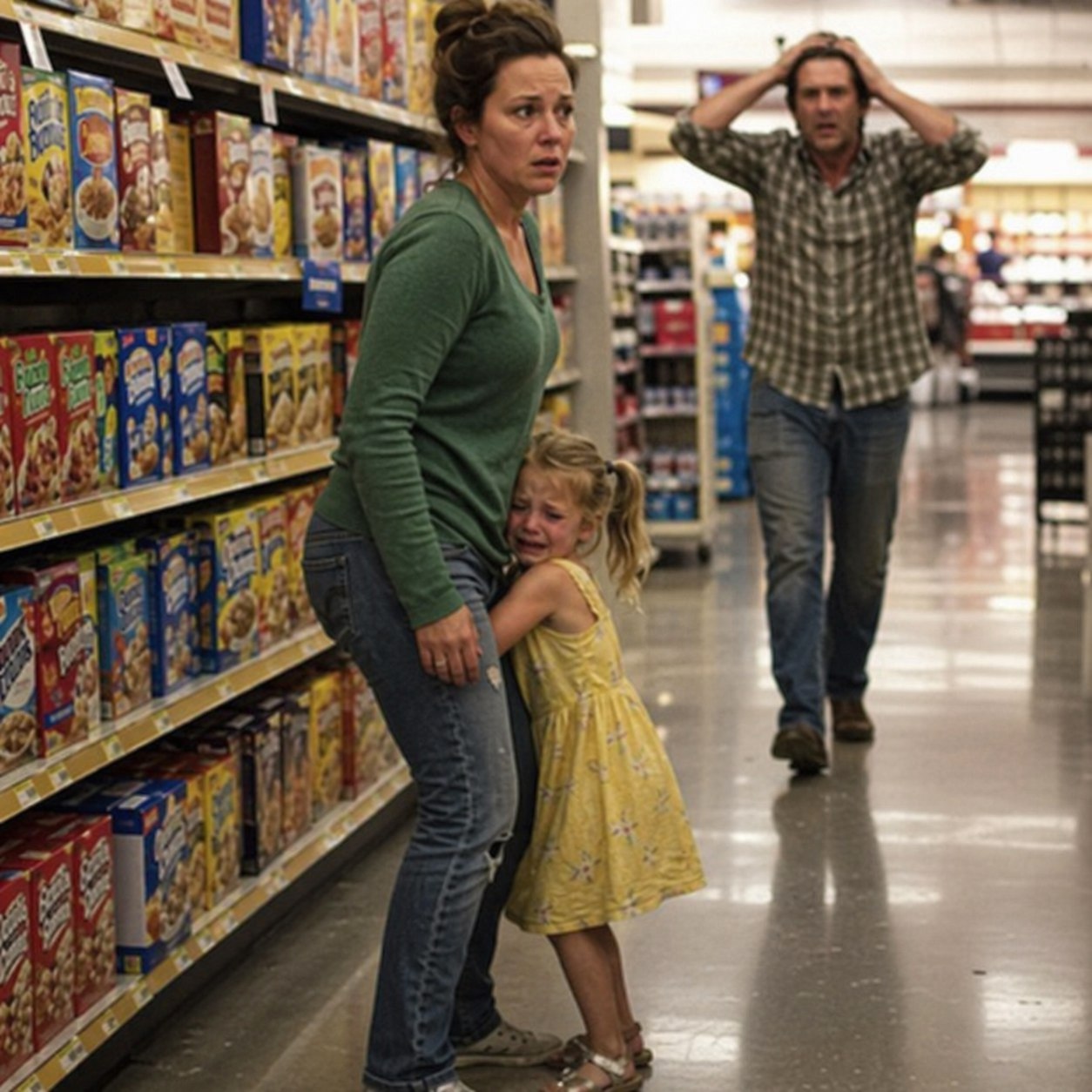
I thought about the aisle.
About how quickly he had filled it with meaning.
That tracked.
“I’m sorry,” I said.
She nodded once.
“Me too.”
Then she took a breath and looked me right in the face.
“I brought something.”
From her purse she pulled a long white envelope, already softened at the corners from being handled too much.
Inside were copies of her adoption papers.
Non-identifying summary. County stamp. Year of birth. Approximate age of birth parents. Mother: eighteen. Father: believed age nineteen or twenty. Private placement later finalized through family court after temporary kinship arrangement.
And at the bottom, a name scratched into a margin in old blue ink.
June Hale.
My skin went cold.
I told her about the cedar box.
She went quiet in the deepest possible way.
Not dramatic.
Not loud.
Quiet like a church after somebody sits down.
“You found letters?” she asked.
“Yes.”
“From my mother?”
“I think so.”
She covered her mouth.
Nobody had ever taught me how to sit across from a stranger who might be my sister.
There is no etiquette for that.
No right angle for your knees.
No proper distance for your hands.
You just try not to stare too much while all the rooms in your life rearrange themselves.
“I grew up with my aunt and uncle in Oklahoma first,” Nora said after a while. “At least that’s what I was told. Then I was adopted formally by my aunt after my uncle passed. We moved around. Missouri, Arkansas, back to Missouri. It was always half a story. Every version left something out.” She looked at the envelope. “My adoptive mother loved me. She was good to me. But she was also the queen of maybe-later. If I asked about where I came from, she’d say, when you’re older. Then when I was older, she’d say, when things settle down. Things never settled down.”
I told her about Dad.
About the man I knew.
He taught me to prime a canvas and rotate my tires and never waste a good peach.
He saved twist ties in a jar.
He could fix almost anything with patience and a flashlight.
He cried once during a Christmas pageant when a second grader forgot her line and just started singing louder instead.
Nora listened like she was starving.
And the more I talked, the more I heard what I had never noticed before.
That I was no longer introducing my father.
I was sharing him.
“He sounds kind,” she said.
“He was.”
That answer hurt me and healed me in the same breath.
Because it meant I was not ready to flatten him into the worst version of a secret.
He had been young. Human. Maybe weak in places. Maybe hopeful in others. Maybe trapped by time and distance and other people’s decisions. Maybe some of all of it.
But he had kept the box.
He had kept the letters.
That meant something.
Maybe not enough.
But something.
Nora’s eyes went wet.
“I spent years thinking I came from a blank wall,” she said. “Just a shut door and paperwork. I told myself it didn’t matter. Then I had Lily, and suddenly every question I’d buried stood up all at once.”
I nodded.
That made perfect sense.
Children turn old questions into present ones.
They make the past practical.
Eye color. Medical history. Why your hands look the way they do. Why your daughter runs toward a stranger in the cereal aisle because some deep little part of her thinks faces mean safety.
Nora and I talked until our coffee went bitter and the lunch crowd started sliding in.
We laid dates side by side.
Ages.
Towns.
The timing fit too neatly not to.
By the time we got up from the booth, we did not have laboratory proof.
We did not need it.
We had June Hale.
We had my father’s letters.
We had a photo.
We had a baby spoon.
We had our faces.
Two days later, Nora came to my mother’s house.
That was harder.
Maybe the hardest part of all.
Mom insisted on baking something, which is what she does when shame and hospitality arrive at the door together.
She made a lemon cake nobody could eat more than three bites of.
Her knee hurt.
Her hands shook.
And yet she laid out plates like this was a church luncheon and not a reckoning.
When Nora walked in, my mother grabbed the back of a chair.
I saw the exact second she saw my father in her.
Not just in the face.
In the posture.
In the way Nora looked around a room before fully entering it.
That was Dad too.
A hesitation he wore when he didn’t want to impose.
Mom cried before anyone sat down.
So did Nora.
So did I, though I held out the longest because apparently denial can survive almost anything if it feels useful.
Mom apologized.
Not once.
Not neatly.
Over and over in different words, which is how real apologies come out.
I should have told you.
I should have opened the box sooner.
I was hurt and I made a selfish choice.
You didn’t deserve silence.
Neither of you did.
Nora, to her credit, did not perform grace she wasn’t ready to give.
She sat with it.
She let the apology be heavy.
Then she said, “I can forgive pain. I just need the truth to stop moving.”
My mother nodded and said, “So do I.”
We went through the cedar box together on the dining room table.
Letter by letter.
One from June, written in slanted blue pen, saying she had named the baby Nora after her grandmother.
One from my father, copied on thin paper, saying he was sorry for his silence and that sorry felt too small.
One from June months later, saying the baby had dimples when she smiled and slept with one fist above her head.
One final letter, years after that, saying contact had become difficult and she was sick and tired and afraid her family would close ranks again.
Then nothing.
The stop in the story sat there like a bruise.
No final answer.
No graceful ending.
Just life doing what it does to people who are poor, proud, young, scattered, and living in years when information moved slower than regret.
At the bottom of the box was one more thing.
A folded receipt from a bus station in Tulsa.
On the back, in my father’s handwriting, were three words.
For when she’s ready.
That one sent Nora out onto the back porch in tears.
I followed a minute later.
She stood by the wind chimes staring out over the yard, where my father had once taught me to throw a softball and where the old tomato stakes still leaned by the shed because nobody had the heart to toss them.
“I don’t know what to do with that,” she said.
“You don’t have to do anything with it today.”
She laughed softly through tears.
“Listen to you. Teacher voice.”
“It’s effective on nervous teenagers and apparently newly discovered sisters.”
At that word, she turned.
Sisters.
There it was.
No drumroll.
No speech.
Just the truth sitting down at last.
She smiled then.
A real one.
Not full, not easy, but real.
“Sisters,” she said.
That was the first time it felt less like an accident and more like a beginning.
Lily came over the following Sunday.
By then she had decided I belonged to her in a very specific category.
Not family exactly.
Not stranger anymore.
Something in between that only children know how to invent.
She brought me a folded drawing from her backpack.
Three women in front of a grocery store.
One tall.
One taller.
One very short, wearing yellow.
A cart beside us.
A giant cereal box above our heads.
The letters on the box were just scribbles, but she had drawn all of us smiling.
At the top she wrote, in the careful unsteady spelling of a five-year-old:
ME MOM AND RACHEL MOM.
Nora saw my face when I read it and immediately said, “We can correct that if—”
“No,” I said too fast. “No. It’s okay.”
Because it was.
Children sometimes tell the emotional truth before adults know where to put it.
I was not her mother.
I never would be.
But in one frightened moment, I had held a place that mattered.
And Lily, in her sweet little way, had turned that into something kind instead of something scary.
That mattered too.
Life after that did not turn magically easy.
Daniel remained a problem in the background, as problems like that often do.
Not dramatic every day.
Just paperwork. Boundaries. carefully structured pickups. lawyers’ letters no one wanted to discuss over dinner.
But Nora handled it with a steadiness I admired.
Not flashy strength.
The everyday kind.
Show up. Sign here. Hold the line. Make dinner. Braid Lily’s hair. Answer the school email. Cry later.
I saw how tired she was.
I also saw how funny she could be when she relaxed.
She snorted when she laughed hard.
Dad used to do that too.
The first time I heard it, I had to sit down.
We started small.
Coffee at my place after Lily’s bedtime.
A walk through the park.
An afternoon at the craft fair where Nora stood behind my booth for ten minutes and watched people do double takes between us until we were both laughing.
My students noticed first.
Not the story.
Just the resemblance.
One of my seniors squinted at Nora during a fall art show and said, “Ms. Lindon, is that your cousin or your time-travel self?”
We laughed so hard I nearly dropped the lemon bars.
Read more by clicking the (NEXT »») button below!