“I have.”
“Then don’t complain.”
His gaze flicked to her face. “You always this kind to injured men?”
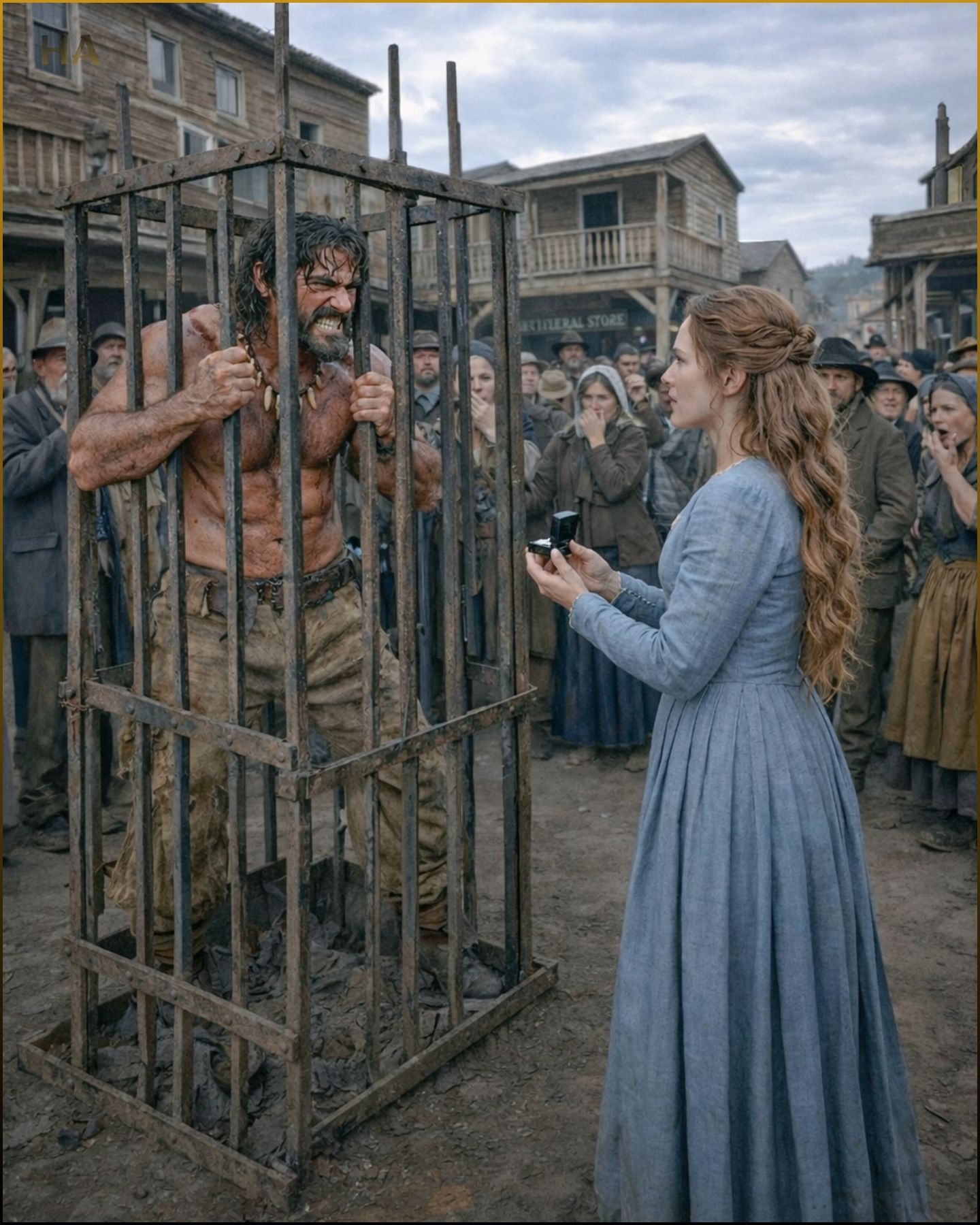
“Only husbands.”
The word changed the air.
Not by much. Just enough.
To break it, she tied off the bandage and asked, “Did you kill Asa Dunn?”
Rafe leaned back in the chair and looked at the ceiling for a long time before answering.
“No.”
“You expect me to take that on faith?”
“No. I expect you to take it because if I meant to lie to you, I’d tell a prettier version.”
She folded the bloodied rag. “Try me.”
He was silent a moment more, then said, “Asa found the strike. I helped him work it. We planned to file together. He came to town to record the claim and got drunk enough to talk. Crowley heard him. Two days later Sloane rode up with four deputies. They said there’d been a dispute over boundaries. Asa stepped out to reason with them. Sloane shot him before he finished his first sentence.”
Nell stopped moving.
Rafe’s voice stayed even, which somehow made it worse. “I was below the cut, gathering water. Heard the shot. Ran uphill. One deputy came at me with a rifle butt. I took his knife and opened him up. Another fired wide. I got hold of him too. After that I caught the butt of a carbine across the skull and woke in chains.”
He turned his hands palm-up on the table. Scarred, broad, cut deep in old places. A survivor’s hands.
“They buried Asa somewhere on that slope and rode me into town as the murderer,” he said. “Crowley needed the claim. Sloane needed Crowley’s money. That’s the whole tale.”
Nell sank slowly into the chair opposite him.
Her father had ridden out to Dunn Creek three days before the fall that killed him. He’d come home muddy, angry, and strangely quiet. When she asked what was wrong, he said only, “Some men figure if they dress thievery in paper, God won’t notice.”
At the time she thought he meant debt.
Now she wasn’t so sure.
“My father argued with Crowley the week before he died,” she said. “I heard shouting in the study. Something about access rights and a survey. Crowley claimed it was over the note.”
Rafe went still. “Access to what?”
“I don’t know.”
His gaze sharpened. “Your land—does the north pasture cut toward Dunn Creek?”
“Yes.”
“And the old wagon road through the Hart place—is it the fastest route to the timberline?”
“Yes.”
For the first time since the kitchen lamp was lit, genuine alarm crossed his face.
“It ain’t just the gold,” he said.
Nell felt cold despite the heat from the stove. “What do you mean?”
“If the richest section lies where I think it does, the only practical way to haul ore before snow is through your north pasture. Crowley doesn’t just want the claim. He wants the road.”
She stared at him.
All at once her father’s sudden urgency, the predatory loan terms, the pressure for a male co-signer, the speed of the foreclosure—everything shifted and locked into a shape uglier than she had imagined. The ranch itself was not merely collateral. It was the missing piece.
“He killed my father,” she said.
Rafe didn’t soften the truth with denial. “I don’t know that yet.”
“But you think it.”
“Yes.”
She pressed her fingers to her mouth, not to hide tears—there were none yet—but to hold in the sound rising through her chest. Grief was easier when random. Murder rearranged it into something sharper.
Rafe stood slowly, favoring one side.
“Nell.”
She looked up.
“If Crowley did that, then tomorrow won’t be about papers. It’ll be about whether he thinks we know enough to be dangerous.”
“And what do you think?”
He reached for the Winchester propped near the door. “I think we should stop pretending this house won’t be tested before week’s end.”
The next morning they rode into Red Hollow and went straight to Crowley’s bank.
The banker looked genuinely rattled when Rafe walked through the front doors alive.
That, more than anything else, pleased Nell.
She laid the marriage certificate on his desk. Rafe signed the debt addendum. Crowley’s clerk filed the copies with shaking fingers. Every part of the process was lawful enough to sting.
Then Crowley leaned back in his chair and smiled that thin smile again.
“You’ve cost me time,” he said. “Nothing more.”
Read more by clicking the (NEXT »») button below!