I read the text message once, then again, then a third time, as if repetition might somehow soften the shape of it. It did not. The screen glowed in my hand for a moment too long before it dimmed, and still the words sat in my head with the same clean edge they’d had the first time.
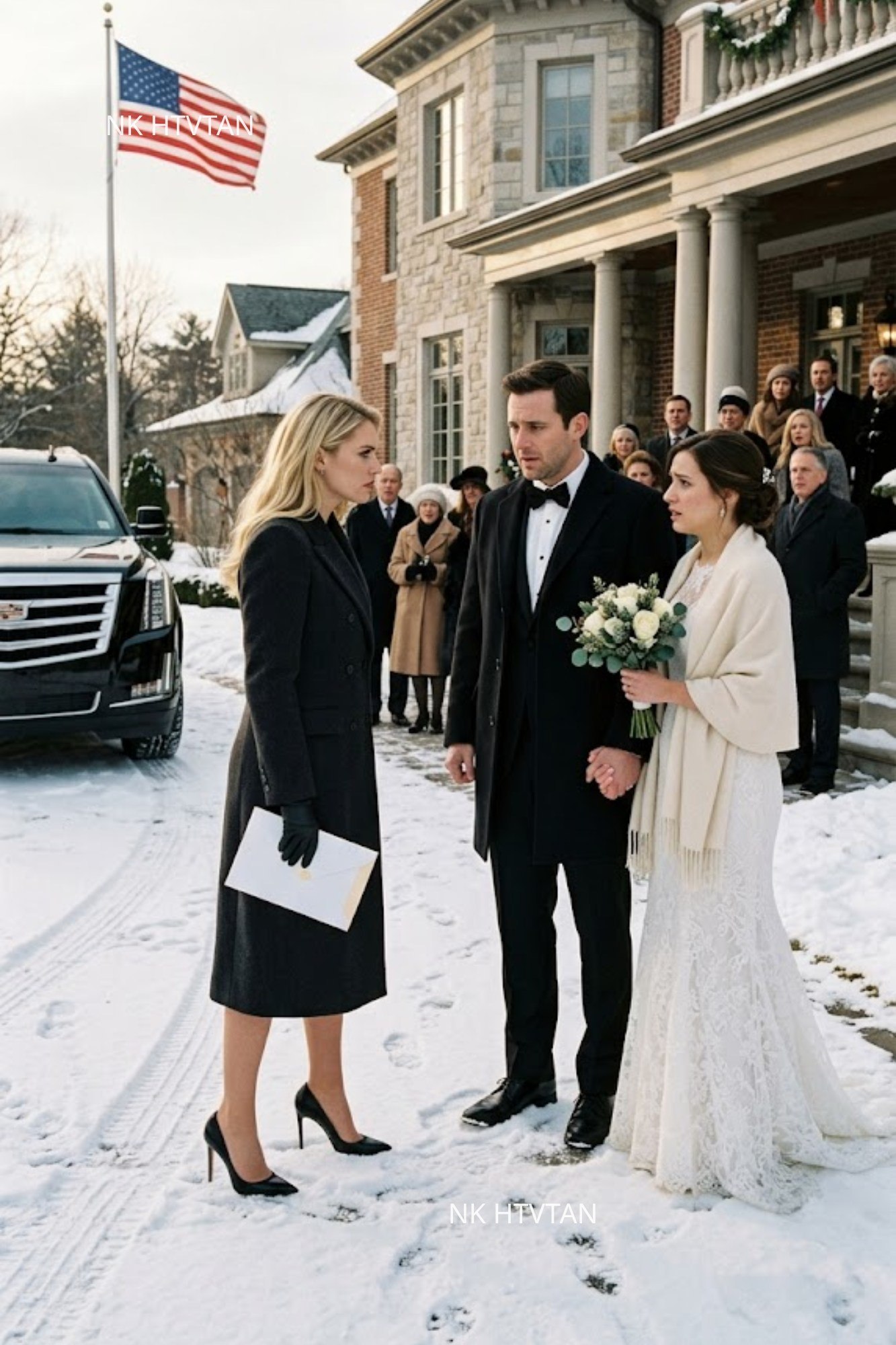
“Just a reminder, little sister. If you swing by later, wait for the scraps. We’ll save you a plate.”
A laughing emoji followed the sentence, bright and weightless, like a decorative ribbon tied around something meant to wound. That was the part people often misunderstood about cruelty inside families like mine. It rarely announced itself in a form anyone outside would immediately condemn. It arrived smiling. It arrived wrapped in jokes, in tone, in plausible deniability. It arrived just light enough that if you reacted honestly, you could be accused of overreacting. My brother Marcus had always understood that instinctively. He knew how to throw something sharp and make it look playful by the time it landed.
Across the parking lot, another limousine rolled toward the entrance, its headlights slicing through the November dusk before going soft under the valet stand’s warm yellow lights. The ballroom doors opened and a spill of music drifted out—violin first, then the fuller sound of a quartet catching itself against the cool air. For a second the music floated over the stone walkway and manicured hedges and then dissolved into the cold. Through the tall windows above the garden I could see blurred figures moving inside, all gold light and black tuxedos and pale dresses, all celebration and choreography. The event was already underway. Two hundred guests, perhaps more. Every aunt, every uncle, every cousin I had grown up alongside. Business friends. In-laws. Old neighbors. People who would later describe the evening as elegant, seamless, beautiful, unforgettable.
I was standing outside in the dark.
I had not been invited.
The message had come from Marcus an hour before the ceremony, which meant he had not merely forgotten me in the chaos of the day the way people would later claim. He had remembered me specifically in order to exclude me more precisely. That required intention. That required enough thought to imagine me nearby and small and hurt and still available for one last humiliation before he went inside to say vows in a room full of people who believed they knew him.
I did not reply.
A couple stepped out of the next car laughing, the woman in a silver dress lifting the hem lightly with two fingers so it would not catch on the wet pavement. Her husband bent close to say something near her ear, and whatever it was made her laugh harder. They moved together toward the entrance as if warmth was a place they had always belonged. A valet closed the car door behind them. The ballroom swallowed them. Light closed over the doorway again.
There is a particular exhaustion that comes from being left out so many times that exclusion no longer arrives as surprise. At first it stings in a bright, immediate way. Then it confuses you because you keep reaching for explanations that preserve your hope in the people doing it. After enough repetitions, though, it becomes something else. A low, chronic ache. A structural understanding. You stop waiting to be chosen. You stop assuming your presence has been accounted for. You learn how to stand slightly to the side of things so that when you are not called forward, you won’t have too far to move.
This was not the first family event I had been erased from. Standing there in the parking lot with the cold creeping through my coat and the music leaking through the doors in measured bursts, I found myself thinking not just of this night but of all the earlier ones that had trained me for it.
I thought of my thirtieth birthday, when my mother called me two days late in the afternoon and apologized in the distracted tone people use when they do not believe an apology is required. She had been helping Marcus move into a new apartment, she said, and everything had been hectic. Then she moved immediately into telling me what a nice building it was and how proud she was of him for choosing such an up-and-coming neighborhood. She never asked what I had done on my birthday. She never asked whether anyone had taken me out, whether I’d celebrated, whether I’d been alone. She sent me a text later with a cake emoji and the word love. I stared at it for a full minute before typing back, “Thanks, Mom.” That was the whole exchange.
I thought of my college graduation, the way my father checked his watch through most of the ceremony because Marcus had some game he wanted to catch afterward. The speeches blurred. My name was called. My parents clapped dutifully. We took photos near a brick wall outside the auditorium, and before I had even finished hugging an old roommate, my father was already telling me they’d have to leave soon if they wanted to make it in time for Marcus’s second half. He asked whether I understood. I said yes, because by then understanding was the only role I knew how to play well.
I thought of holidays where I brought dishes I had cooked and somehow still ended up seated far enough from the center of the table that the conversation barely reached me unless someone needed the salt or another serving spoon. I thought of Christmas cards where I stood at the edge of the family photo, angled slightly inward, smiling the smile of someone who knows she has been included technically but not compositionally. In half of those photos I looked like an afterthought that had learned how to stand still.
Inside the ballroom applause rose, brief and synchronized, then faded into something louder and warmer. Perhaps the bride had entered. Perhaps a toast had landed. Perhaps people were simply clapping because weddings give adults permission to perform feeling. I could picture Marcus already at the center of it, his smile easy, his suit cut perfectly, his confidence carrying the whole room as if attention were a birthright rather than a thing others had to earn. He had always moved through life with that kind of effortless centrality. He didn’t grab the spotlight. It bent toward him voluntarily. Or maybe not voluntarily. Maybe our family had trained itself so thoroughly around him that no one remembered how to do anything else.
The golden child. That phrase gets used too loosely sometimes, but in Marcus’s case it fit with painful precision. He was not better than me in any essential way, not kinder, not steadier, not wiser. But he had a particular combination of traits that my parents—and later everyone else orbiting them—found irresistible. He was charming without effort. Attractive in that polished, broad-shouldered, confident way that looked expensive even before he had money. He could walk into a room and make older women feel maternal, men feel approving, strangers feel included. He knew how to laugh at himself just enough to seem humble and how to talk about his ambitions without ever sounding insecure. He was always becoming something. A better athlete, a promising student, a future businessman, a man with potential, a man in motion. The story of Marcus was always unfolding toward something impressive.
The story of me, in my family, was simpler and far less glamorous. I was the strong one. The dependable one. The one who didn’t make trouble. The one who understood. The one who would be fine.
I had spent most of my life being fine.
People think that word means okay. Sometimes it doesn’t. Sometimes fine means useful enough not to require care. Fine means self-contained. Fine means easy to postpone. Fine means someone whose hunger has become so invisible that the people around her stop believing she has any.
I looked across the lot toward the building itself. The limestone facade was pale even in the fading light, all symmetry and old-world polish. Tall windows. Brass fixtures. The quiet certainty of an expensive place that functions so smoothly precisely because people like me learn its workings before guests ever notice them. I knew the Grand Belmont well. Better than most of the guests inside. Better than some of the staff. Better, in a way, than Marcus ever would. He knew it as a stage for his wedding. I knew it as a structure. As an organism of contracts, labor, design, maintenance, staffing, timing, materials, credit lines, vendor relationships, and daily decisions invisible to anyone who only ever arrived dressed for an event.
That knowledge settled inside me, heavy and quiet.
Behind me, another wave of applause broke against the cold air. Laughter followed, fuller this time. Probably the first dance. I imagined Marcus twirling his bride under chandeliers while phones were raised and champagne glasses caught the light. I imagined my mother glowing with borrowed pride, telling strangers how beautifully everything had come together, how tasteful the floral design was, how thrilled Jessica’s family seemed. I imagined my father standing a little behind her, smiling in that vague satisfied way men do when everything around them appears to confirm the version of family they prefer.
No one was asking where I was.
And if anyone did, I knew exactly how my mother would answer.
“Oh, you know how she is. She keeps to herself. She’s busy. She’s doing fine.”
That line had protected them for years. It turned my exclusion into a personality trait. It made my absence sound like preference. It allowed them to ignore every instance in which I had been left out, dismissed, forgotten, or used, because if I was fine, then nothing needed repair.
I left before the ceremony ended. I did not wait for scraps.
By the time I got home, the city had settled into the kind of early winter quiet that makes even expensive neighborhoods feel exposed. I took off my coat, set my phone face down on the kitchen counter, and poured a glass of wine without turning on the television. The silence in my living room was different from the silence outside the ballroom. Outside had been cold, public, edged with humiliation. Here the silence was honest. It did not pretend I belonged elsewhere. It did not ask me to smile through anything.
Eventually I did look at my phone again. Social media had already begun doing what it does best: flattening a complicated evening into proof of collective joy. There was Marcus beneath a canopy of white lights, kissing Jessica while guests cheered. There was my mother in a navy dress standing beside the bride’s mother, their faces arranged into the perfect expression of mutual pride. There was the wedding cake, six tiers, white icing, gold leaf, flowers threaded through like an afterthought someone paid thousands for. There were photos of the reception room glowing exactly as I had imagined it. My absence did not register anywhere. No missing shape. No unanswered question. No visible gap.
I drank my wine slowly and watched the images pass.
For years I had filled spaces no one else noticed. Quietly. Reliably. Without asking to be named. If a bill had to be covered discreetly, I covered it. If a plan needed smoothing over, I smoothed it. If Marcus forgot something, overspent, overpromised, overreached, or simply assumed there would be help, I was often the help before anyone had to ask. I had become so efficient at that role that eventually my support stopped reading as generosity and hardened into expectation. Expectation, over time, always curdles into entitlement.
That night the thought that settled over me was not dramatic. It did not come with fury or tears or a sudden desire to confront anyone. It arrived more quietly than that, and because it arrived quietly, I trusted it more.
I was done.
Not in a theatrical sense. Not in the way people announce when they still secretly hope to be chased. I did not want explanations. I did not want them to suddenly discover my worth through my pain. I did not want to bargain my way into belonging. I simply felt, with a calm so deep it almost resembled fatigue, that something had reached its natural limit.
There would be no more automatic rescues. No more stepping in before consequences landed. No more fixing what other people had the luxury of never noticing because I had always carried the weight before it showed.
I had been the invisible solution for so long that they had forgotten what life would feel like without me.
They were going to remember.
The next day passed almost entirely in silence. That, too, felt instructive. Morning came and went. Afternoon stretched into evening. No call from my parents to say they had missed me. No apology from Marcus. No text from a cousin asking why I hadn’t been there. No one reached for me until almost fourteen hours after I had left the parking lot.
I was lying in bed in the dark when my phone lit up. My mother.
“Are you doing okay over there?”
I stared at the message long enough for the screen to dim again, then tapped it awake.
The sentence was careful, neutral, empty of context. There was no mention of the wedding. No acknowledgment that I had not been there. No question about why I had been left out. It was not concern. It was maintenance. A systems check. A glance at the backup generator to make sure it had not gone offline.
I almost laughed.
Eventually I typed back, “I’m fine.”
That word again.
It had carried me through nearly every disappointment in my family. As long as I was fine, nobody had to examine anything too closely. As long as I was fine, my loneliness became manageable, my hurt became invisible, my silence became a virtue, and their neglect became morally weightless. Fine was the most efficient lie I had ever learned to tell, because it relieved everyone else of labor.
It hadn’t started recently. Patterns like this never do. They begin early, often before language is fully available, and then they repeat so steadily that by the time you are old enough to question them, they feel like personality rather than structure.
I was twelve when Marcus got into an elite summer baseball program. The cost consumed our household for weeks. My parents treated the decision as if the future itself were under discussion. There were tense dinner conversations, budget sheets spread across the table, whispered calculations after they thought I had gone upstairs, phone calls to relatives, talk of sacrifice, opportunity, investment, what this could mean for him. His future was a project. A family project. Something all of us were expected to reorganize around. No one asked what I wanted that summer. No one asked how I would feel when my art classes quietly disappeared from the family budget.
When the decision was finally announced, my father looked at me with a softness that made the sentence hurt more, not less. “You understand, right?” he said. “You’re the strong one.”
I nodded.
At twelve, strength meant silence.
That became the template. When Marcus needed, the family pivoted. When I lost, the family praised my maturity. When Marcus’s dreams grew expensive, I was reminded how much pride there was in being low-maintenance. It sounded like compliment. It functioned as extraction.
Read more by clicking the (NEXT »») button below!