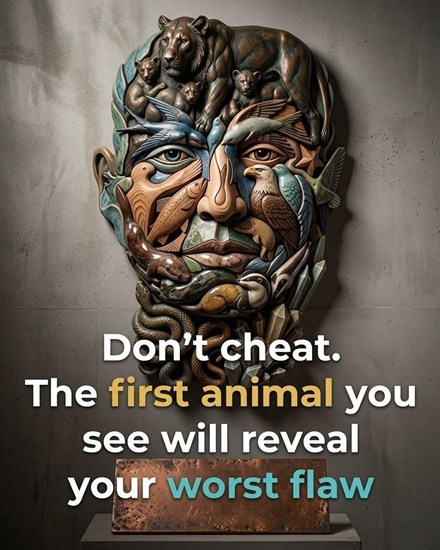
Have you ever looked at a viral image online and noticed that you immediately focused on one object while someone else saw something completely different? This common experience has helped make visual personality quizzes and “first animal seen” challenges some of the most widely shared content on the internet. Millions of people participate in these tests every year because they are entertaining, easy to understand, and often encourage people to think about themselves in new ways.
These visual puzzles usually present a complex image containing multiple animals, shapes, or hidden objects. Participants are asked a simple question: what did you notice first? The answer often comes with a personality description or interpretation that claims to reveal something about the viewer. While these tests are enjoyable and can spark interesting conversations, psychologists generally do not consider them scientific tools for measuring personality or identifying character traits.
The popularity of these challenges is closely connected to the way the human brain processes information. Every second, our brains receive enormous amounts of visual input from the environment. To make sense of this information efficiently, the brain constantly selects, organizes, and prioritizes certain details while filtering out others. This process helps explain why different people may notice different elements when viewing the exact same image.
Researchers who study perception have long understood that attention is influenced by many factors. Past experiences, expectations, emotions, interests, and even current mood can affect what a person notices first. Someone interested in animals may immediately identify animal shapes in a picture, while another person might focus on colors, patterns, or background details. These differences do not necessarily reveal hidden personality flaws, but they do demonstrate the unique ways individuals interpret visual information.
One reason these tests feel surprisingly accurate is a psychological concept known as the Barnum Effect. This phenomenon occurs when people accept broad, general statements as uniquely applicable to themselves. Descriptions such as “you sometimes doubt yourself” or “you value loyalty but can be cautious around others” are relatable to many individuals. As a result, people often feel that a personality interpretation understands them deeply, even when the description could apply to a large percentage of the population.
Another reason these visual quizzes remain popular is that humans naturally enjoy self-reflection. People are curious about their strengths, weaknesses, habits, and motivations. Even when a test is not scientifically validated, it can encourage individuals to think about aspects of their lives that they may not normally examine. In this sense, the value often comes not from the result itself but from the personal reflection it inspires afterward.
The internet has amplified the popularity of these personality challenges because they are highly shareable. A person completes the test, receives a result, and then compares it with friends and family members. Conversations quickly emerge as people discuss whether the descriptions match their experiences. These discussions can be entertaining and may even encourage deeper conversations about personality, communication styles, and personal growth.
Many of these quizzes assign symbolic meanings to animals that have appeared in stories, myths, and cultural traditions for centuries. Lions are often associated with leadership and confidence. Rabbits may symbolize caution or sensitivity. Birds are frequently connected with freedom and independence. Snakes are commonly linked to transformation or mystery. Elephants are often viewed as symbols of wisdom and memory. These associations are cultural interpretations rather than scientific facts, but they contribute to the appeal of the tests.
Read more by clicking the (NEXT »») button below!