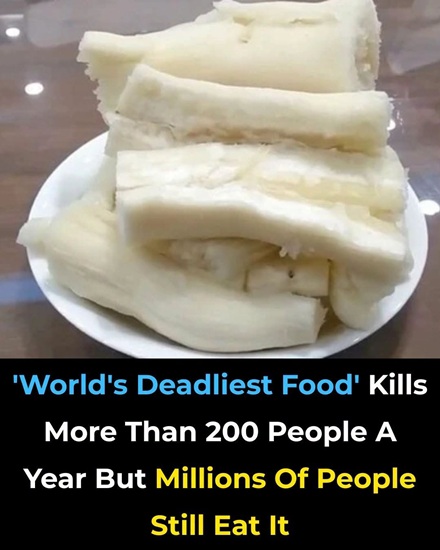
Cassava, also known as manioc or yuca, is one of the most widely consumed staple crops in the world, feeding hundreds of millions of people every day across Africa, Asia, and Latin America. Despite its importance as a reliable source of carbohydrates, especially in regions where other crops may fail due to drought or poor soil conditions, cassava carries a lesser-known biological risk that has earned it a reputation as one of the most carefully prepared foods on Earth.
The plant itself is not inherently dangerous when properly processed, but it contains natural chemical compounds that can release cyanide under certain conditions, making preparation absolutely essential for safe consumption. Cassava originates from South America, where it was first domesticated thousands of years ago before spreading globally through trade and colonization. Today, it is cultivated in tropical climates where it thrives even in poor soils and under harsh environmental conditions.
This resilience has made it a critical food security crop in many developing nations. However, cassava contains cyanogenic glycosides, naturally occurring compounds that serve as a defense mechanism for the plant. When the plant is damaged—through peeling, chewing, or improper processing—these compounds can break down and release hydrogen cyanide, a toxic substance that interferes with the body’s ability to use oxygen at the cellular level.
The risk associated with cassava consumption is not related to properly prepared food, but rather to insufficient or incorrect processing methods. In traditional practices, communities that rely heavily on cassava have developed detailed preparation techniques over generations. These methods often include peeling the root thoroughly, soaking it in water for extended periods, fermenting, drying, or cooking it thoroughly to reduce toxic compounds to safe levels.
When these steps are followed correctly, cassava becomes a safe and highly nutritious staple. However, when these precautions are skipped or rushed, particularly in situations of poverty or food scarcity, the risk of cyanide exposure increases significantly. Health organizations, including the World Health Organization, have documented cases of illness and death linked to improperly processed cassava.
Read more by clicking the (NEXT »») button below!